Epoxy Resin Puppet Floor: The Bold Interior Design Trend
Interior design is constantly evolving. However, every so often, a concept emerges that truly stops people in their tracks. The epoxy resin puppet floor is one such innovation. Striking, surreal, and undeniably conversation-starting, this flooring trend blends art, storytelling, and contemporary craftsmanship into one immersive design feature.
In this blog, we explore the rise of puppet-themed epoxy flooring, its visual impact, installation process, styling potential, and why it is captivating modern homeowners and viral social media audiences alike.
What Is an Epoxy Resin Puppet Floor?
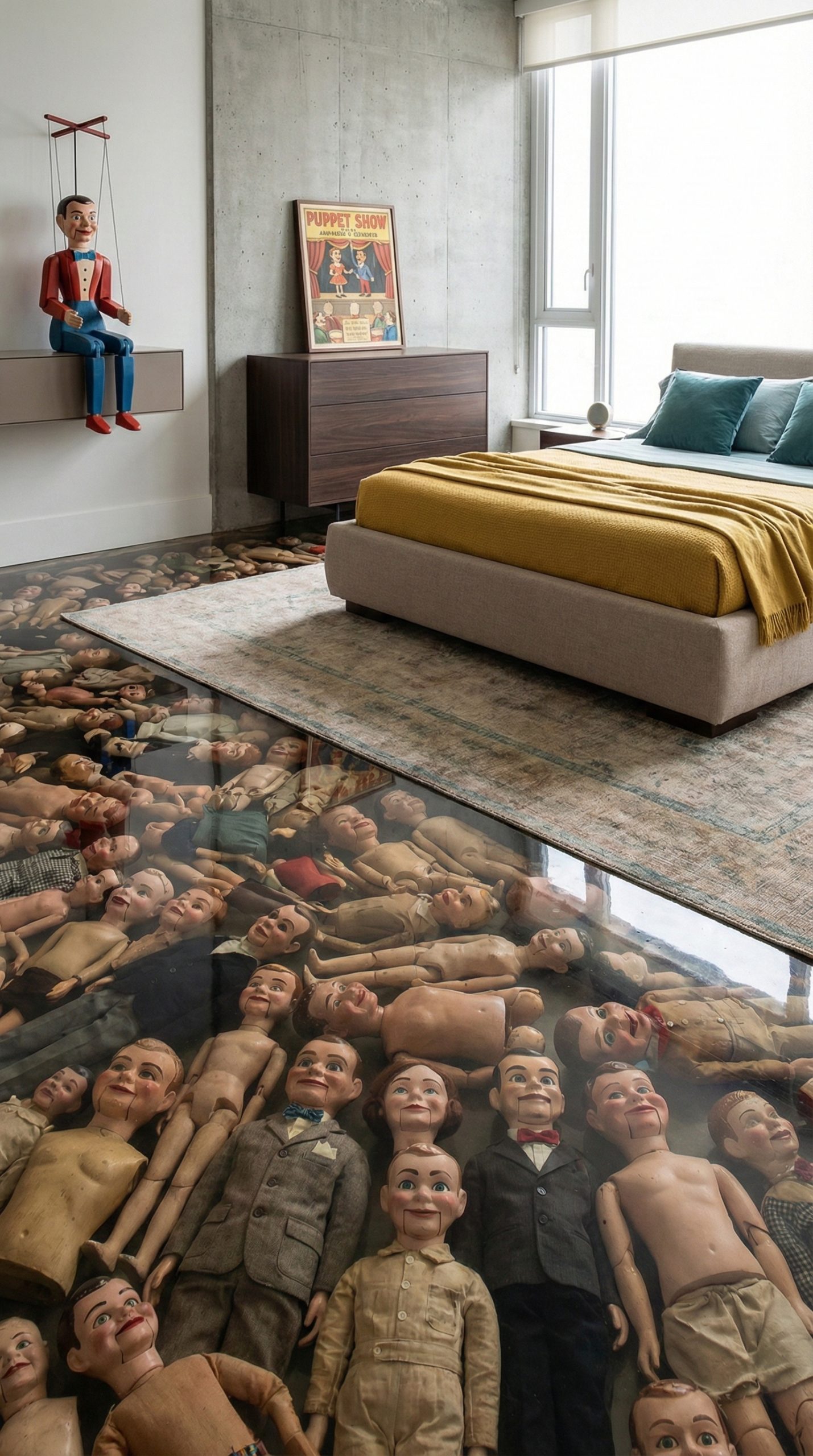
An epoxy resin puppet floor is a bespoke flooring installation where vintage or replica puppets are embedded beneath layers of crystal-clear resin. The result is a glass-like surface that preserves the figures while creating depth and realism.
Unlike printed 3D flooring, this method uses physical objects. Consequently, the finished effect feels far more authentic and tactile.
Moreover, each installation tells a unique story. No two floors are ever identical.
A Surreal Statement in Modern Bedroom Design
At first glance, the bedroom appears calm and minimalist. Clean lines dominate the space. Neutral tones create balance. Soft textiles add warmth.
Yet, the floor tells a completely different story.
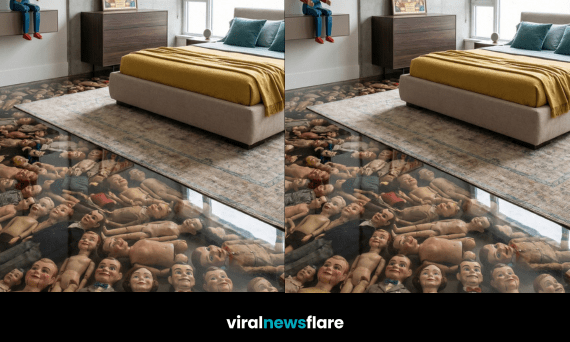
Beneath the polished resin surface lies a dense arrangement of vintage ventriloquist dummies and marionettes. Their painted expressions stare upward, frozen in time. This contrast is intentional.
It blends serenity with spectacle.
As a result, the flooring becomes the focal point without overwhelming the room’s overall aesthetic.
Why Puppet Epoxy Floors Are Going Viral
Unusual interiors thrive on social media. Viewers crave designs they have never seen before. Puppet epoxy floors deliver exactly that.
Several factors drive their viral appeal:
-
Shock value – The unexpected imagery captures attention instantly.
-
Nostalgia – Vintage puppets evoke theatre, storytelling, and childhood memories.
-
Art installation feel – The floor resembles a gallery exhibit.
-
Hyper-real depth – Resin magnifies detail and shadow.
-
Photogenic reflections – Light bounces dramatically across the surface.
Therefore, these floors perform exceptionally well across Instagram, Facebook, and Pinterest.
They are not just flooring. They are content.
Lighting’s Role in Visual Impact
Lighting transforms the entire installation.
Natural daylight reveals colour subtleties. It highlights puppet facial expressions. Meanwhile, evening lighting creates mood.
Soft warm LEDs produce theatrical shadows. Spotlights intensify reflections.
Therefore, designers often plan lighting alongside the flooring concept.
It maximises the immersive effect.
Psychological & Emotional Reactions
Interestingly, puppet epoxy floors provoke strong emotional responses.
Some viewers feel nostalgia. Others feel curiosity. A few feel unease.
This emotional duality is part of the appeal.
Design is meant to evoke feeling. Safe interiors rarely go viral.
Bold interiors always do.
The Intersection of Art & Interior Design
Puppet epoxy floors blur traditional design boundaries.
They are not merely decorative. They are experiential.
Walking across the surface feels surreal. Guests pause instantly. Conversations begin naturally.
In many ways, the floor becomes performance art within a domestic setting.
It reflects personality, creativity, and risk-taking design confidence.
Future of Object-Embedded Epoxy Flooring
As resin technology advances, object flooring will become even more immersive.
We may see:
-
Integrated LED lighting beneath resin
-
Motion illusion layering
-
Holographic inserts
-
Interactive AR overlays
The puppet floor trend is only the beginning.
Design innovation continues to push boundaries.
Final Thoughts
The epoxy resin puppet floor is not for the faint-hearted. It is bold, theatrical, and unforgettable.
Yet, that is precisely why it works.
By pairing surreal flooring with minimalist bedroom styling, designers create spaces that feel both grounded and extraordinary.
It is where art meets architecture.
It is where storytelling meets surface design.
And most importantly, it is where interiors become experiences rather than environments.