Insect Flower Beds: Bringing Playful Garden Design to Life
If you’re searching for a garden feature that’s both imaginative and irresistibly eye-catching, whimsical insect-shaped flower beds might just be your next outdoor obsession. These delightful designs—crafted into bees, caterpillars, butterflies, and ladybirds—bring a burst of colour, cheer, and creativity to any lawn. Whether you’re a family seeking a fun-filled outdoor haven or a floral enthusiast looking to add flair to your landscaping, these floral masterpieces offer a joyful fusion of nature and design.
In this blog, we’ll explore the magic of these insect-inspired creations, delve into the gardening trends behind them, and offer ideas for incorporating them into your own space. From bee-shaped borders to smiley caterpillars, let’s buzz into the blooming world of playful flower beds.
The Blooming Bee: A Symbol of Sustainability and Sweetness
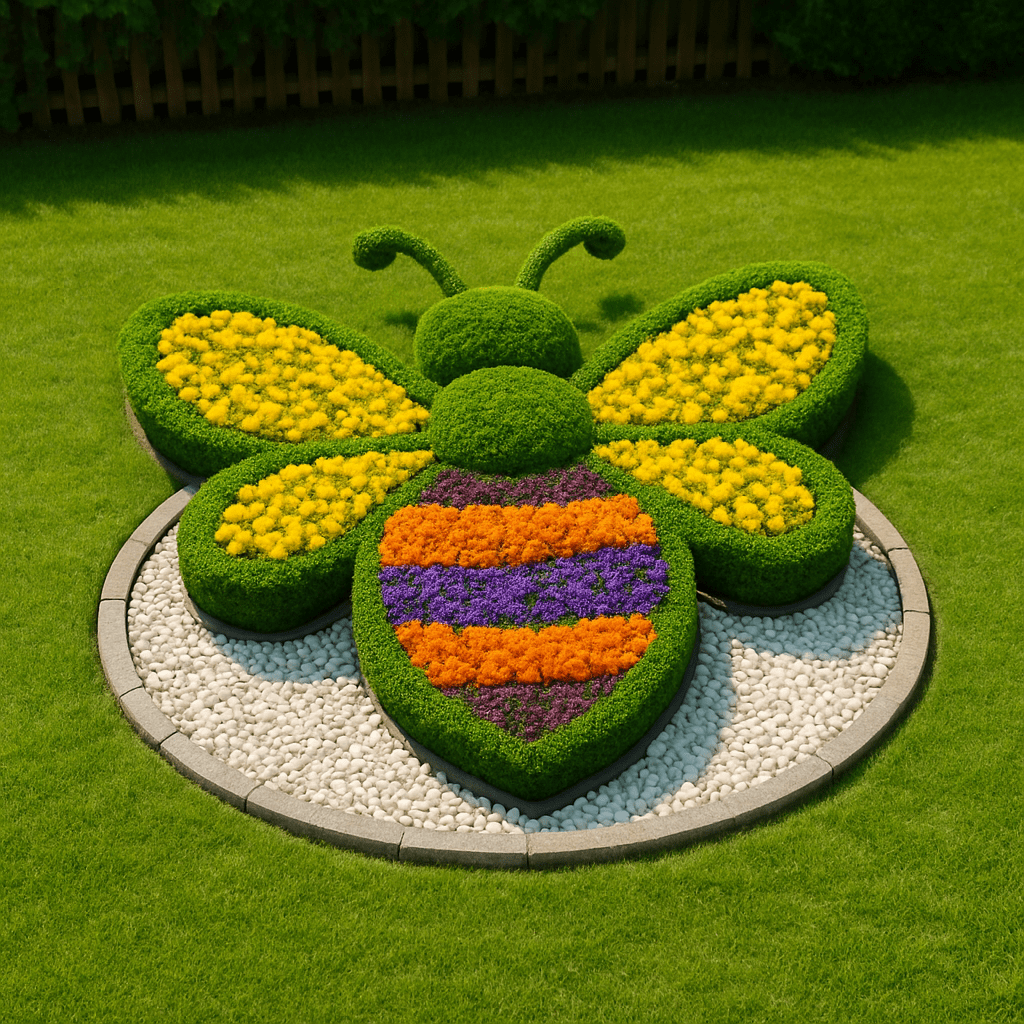
The bee-shaped flower bed is a tribute to one of nature’s most beloved pollinators. Featuring a combination of sunny yellow blooms on the wings and bold orange and purple stripes on the body, this vibrant floral sculpture is sure to be the buzzing heart of any garden.
Beyond its visual charm, the bee also symbolises sustainability, community, and the importance of protecting our pollinators. When created using pollinator-friendly plants like marigolds, calendulas, or coreopsis, these displays can double as practical pollination stations.
Design Tip: Frame your bee with pale stones or gravel to help it stand out against green grass. The stone border adds visual contrast while keeping the design neatly contained.
The Cheerful Caterpillar: Perfect for Family Gardens
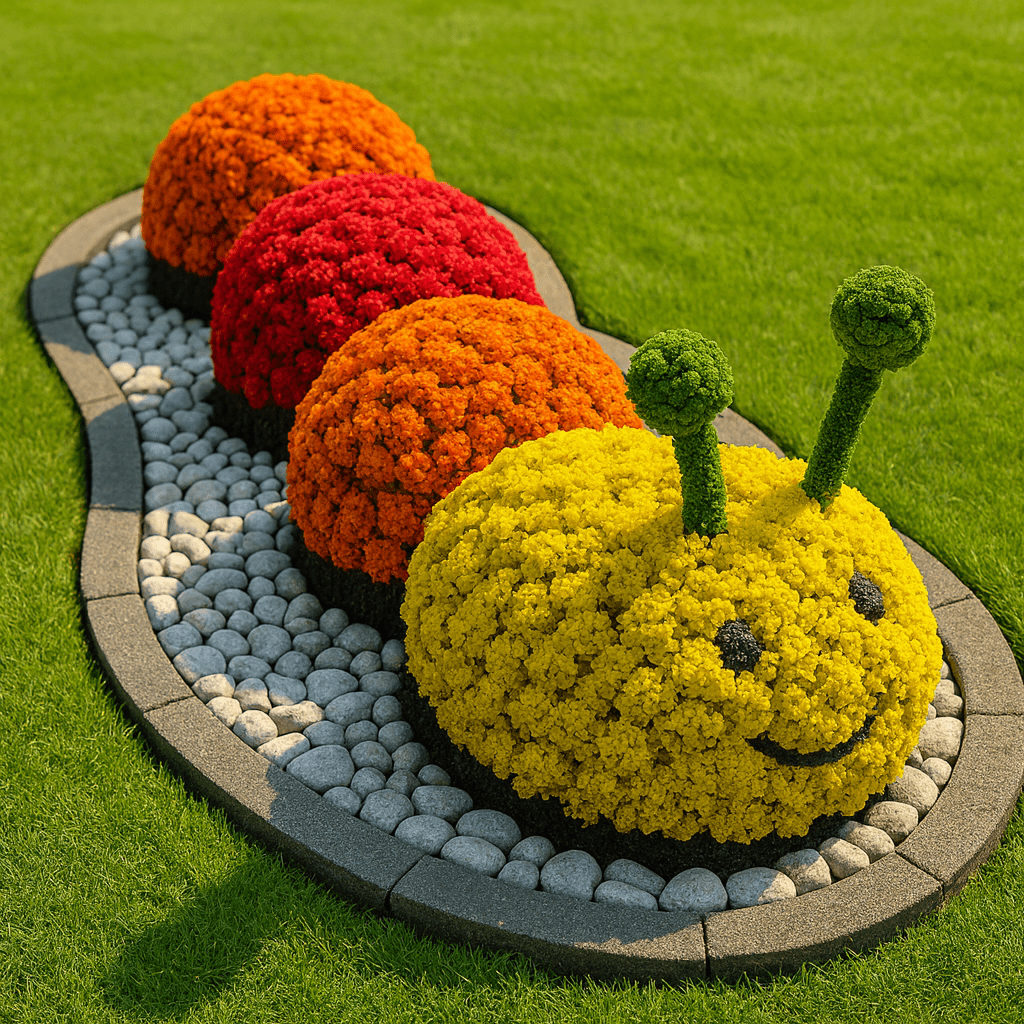
Nothing says “fun garden” like a brightly coloured caterpillar. With cheerful dome segments made from mounded blooms in red, orange, and yellow, this design is particularly suited for gardens shared with children. The face—complete with a smiling expression and green antennae—gives it irresistible personality.
This playful form encourages curiosity and interaction, making it an ideal centrepiece for a family-friendly outdoor space or a school garden project.
Planting Tip: Choose low-maintenance, vibrant plants like chrysanthemums, begonias, or zinnias. These varieties provide bold colours and dense shapes that are easy to train into caterpillar curves.
The Beautiful Butterfly: A Garden Classic with a Twist
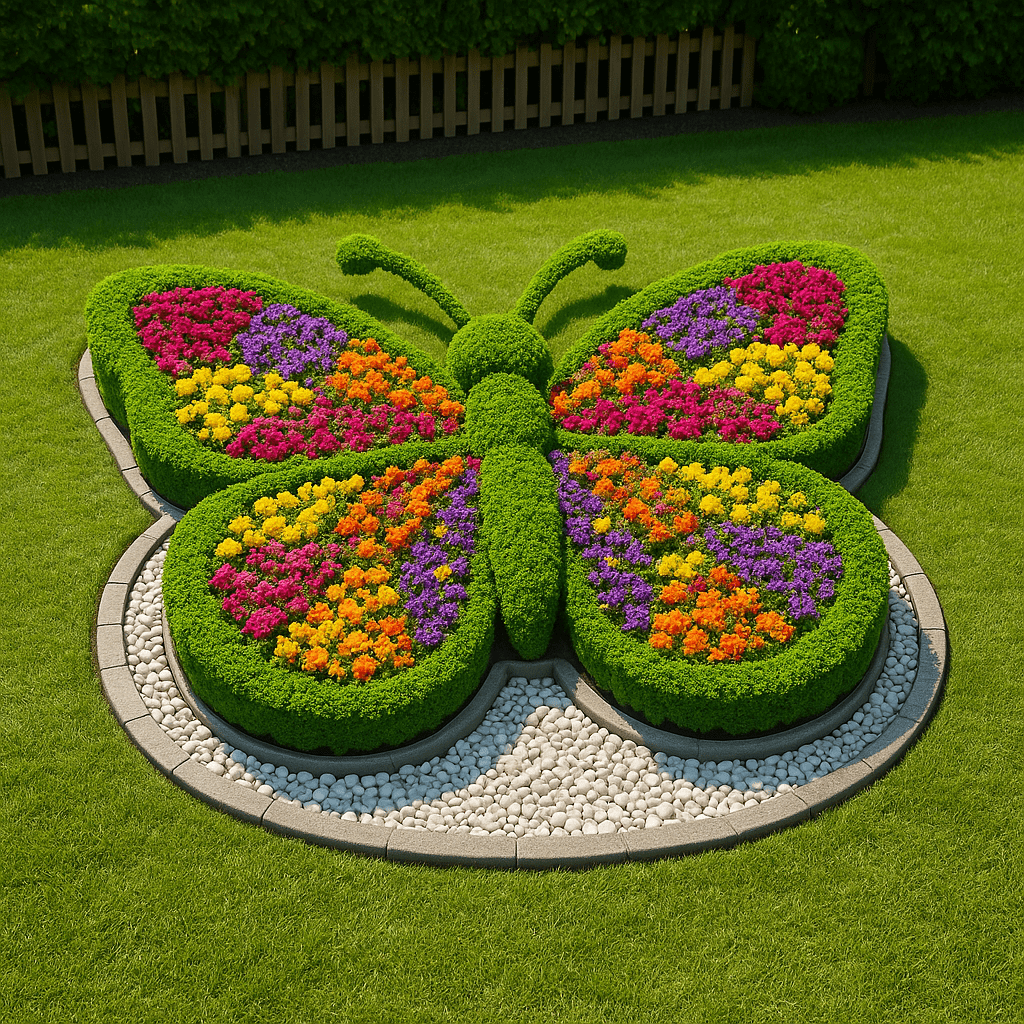
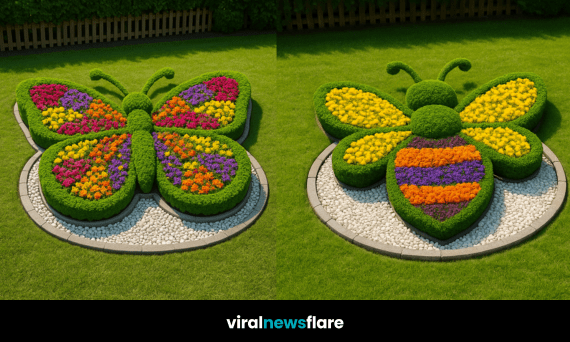
The butterfly-shaped flower bed is an iconic choice, and for good reason. Representing transformation and renewal, the butterfly carries deep symbolic meaning and brings an elegant, symmetrical look to any lawn.
The example shown features a lush, green outline filled with a stunning rainbow of flowers—pinks, purples, yellows, and oranges arranged in a perfectly balanced composition. This artistic use of symmetry and colour not only draws the eye but also creates a sense of harmony in the garden.
Styling Tip: Butterflies work well in larger lawns or communal spaces. Their wide wingspan allows for generous planting, which can be varied with the seasons for ever-changing displays.
The Lovely Ladybird: A Burst of Red Joy
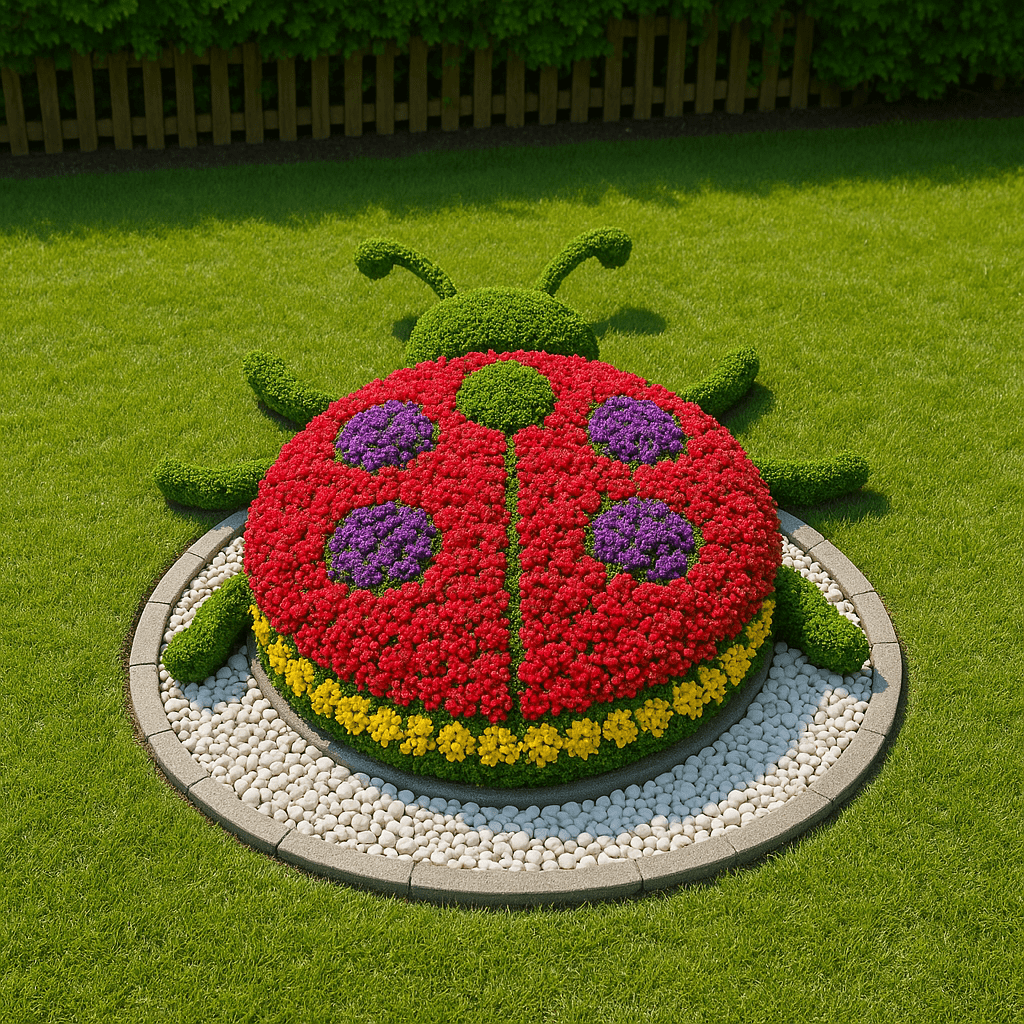
No insect-themed flower bed collection would be complete without the charming ladybird. With its bold red wings, purple spots, and cheery green legs, this design adds a bold punch of colour to the lawn.
Ladybirds are often seen as symbols of luck and happiness, making them a wonderful positive addition to outdoor spaces. The contrast of red and purple blooms surrounded by yellow border flowers gives the illusion of movement and life.
Plant Suggestion: Use densely flowering annuals like red geraniums and purple petunias to mimic the ladybird’s spotted pattern. Pair with creeping greenery for the legs and antennae to enhance realism.
Why Insect-Themed Flower Beds Are Trending
Gardeners across the UK are embracing imaginative landscaping as a way to personalise their outdoor space. Insect-shaped flower beds align perfectly with this trend, offering:
-
Whimsical aesthetics – They brighten gardens with a sense of fun and creativity.
-
Educational value – Great for kids, these designs promote learning about pollinators and biodiversity.
-
Instagrammable moments – Their bold shapes and colours make them perfect for social media snaps.
-
Seasonal adaptability – Planting can be changed with the seasons to ensure year-round appeal.
These designs merge the charm of childhood nostalgia with the beauty of horticultural craftsmanship, creating a landscape that feels joyful and alive.
Creating Your Own Whimsical Insect Garden
Fancy creating your own insect-inspired masterpiece? Here are some steps to help you get started:
-
Choose Your Insect: Pick a creature that suits your space and taste. Bees and caterpillars are ideal for smaller gardens, while butterflies and ladybirds suit larger plots.
-
Sketch the Design: Outline the shape using chalk or a garden hose. This helps visualise size and proportions before planting.
-
Create the Borders: Use low boxwood hedges or artificial green edging to define the shape clearly.
-
Select Your Plants: Go for bright, compact flowering varieties. Make sure they bloom in complementary colours to match your insect’s “design.”
-
Prepare the Ground: Use raised beds filled with nutrient-rich soil. Ensure proper drainage and spacing to allow each plant to flourish.
-
Add Decorative Elements: Frame your design with stone paths or white pebbles to create contrast and define the edges.
-
Maintain Regularly: Keep plants pruned, watered, and fertilised to maintain shape and vibrancy throughout the seasons.
Where to Feature These Floral Friends
These insect-shaped flower beds are not just for private gardens. They’re also perfect for:
-
Community parks
-
Schoolyards
-
Botanic gardens
-
Playgrounds
-
Hospital or care home gardens
Adding one of these vibrant installations to a public or shared green space brings joy to many while encouraging a deeper appreciation for nature’s smaller wonders.
Final Thoughts: Gardens That Make You Smile
Whimsical insect-shaped flower beds are more than garden features—they’re vibrant expressions of creativity, nature, and joy. Whether you’re bringing bees and butterflies to your backyard or brightening a communal green with caterpillars and ladybirds, these designs turn lawns into living, blooming art.
They invite play, spark curiosity, and create enchanting outdoor experiences for all ages.